L’Ombre du Géant : 4 Révélations sur l’Univers Fantasmagorique de Piranèse (et son Double Numérique)
1. Introduction : Le vertige de la pierre
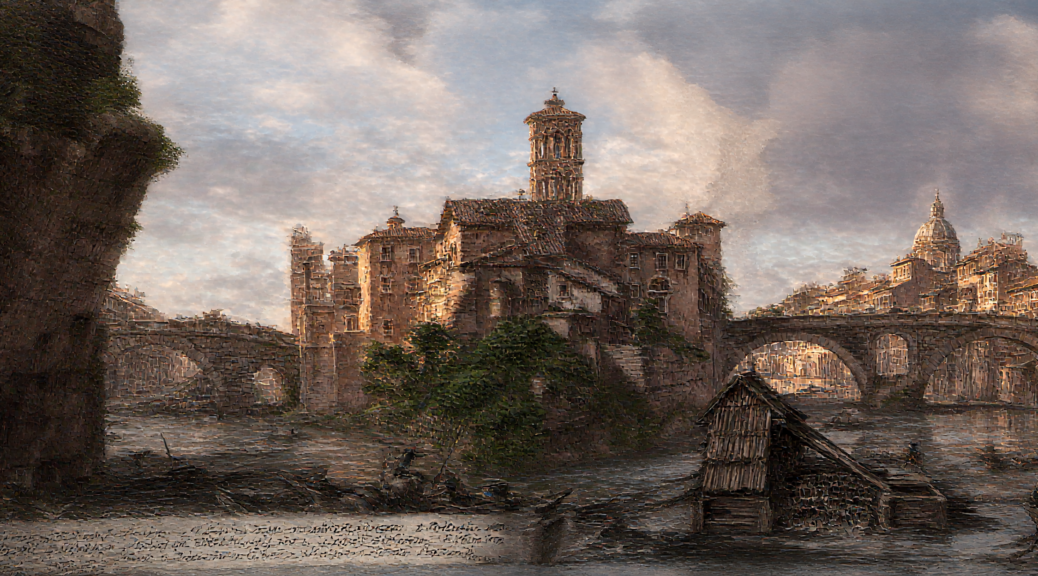
Face aux plaques de cuivre de Giovanni Battista Piranèse, le regard ne se contente pas d’observer ; il subit une véritable hallucination architecturale. Un malaise oppressant se dispute à un émerveillement sacré devant ces structures dont la démesure semble insulter les lois de la physique. Pourquoi ces ruines, figées dans une dyschronie éternelle, nous semblent-elles plus vibrantes, plus habitées que nos métropoles contemporaines ? Piranèse n’était pas un simple topographe de Rome ; il était le premier visionnaire du Sublime, érigeant des monuments qui sont autant de cénotaphes à la gloire et à la chute de l’ambition humaine. Continuer la lecture de L’Ombre du Géant : 4 Révélations sur l’Univers Fantasmagorique de Piranèse (et son Double Numérique)→
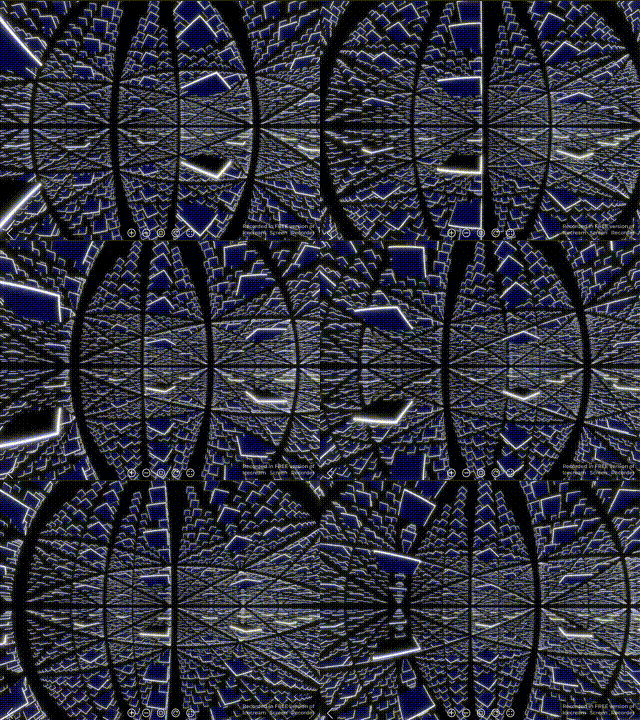
This is workflow to create a scene in Coraulis. It is done in Blender, but can be realised any similar 3D software. The first step consists in creating a “landscape”. We used the Geometry Nodes to create it, but can be done the usual way or with another software equivalently. It is then lit which can also be done anywhere else. Then the camera is animated along a path. The rendering process uses the Equirectangular 360 Camera which is built in Blender. But we can find the same camera in Cinema 4D, 3DsMax or Twinmotion. The 360 film is then recut to fit Coraulis requirements. Step by step with Blender, C4D or Max, we can create an amazing experience with plying with the context, the movements or the light.
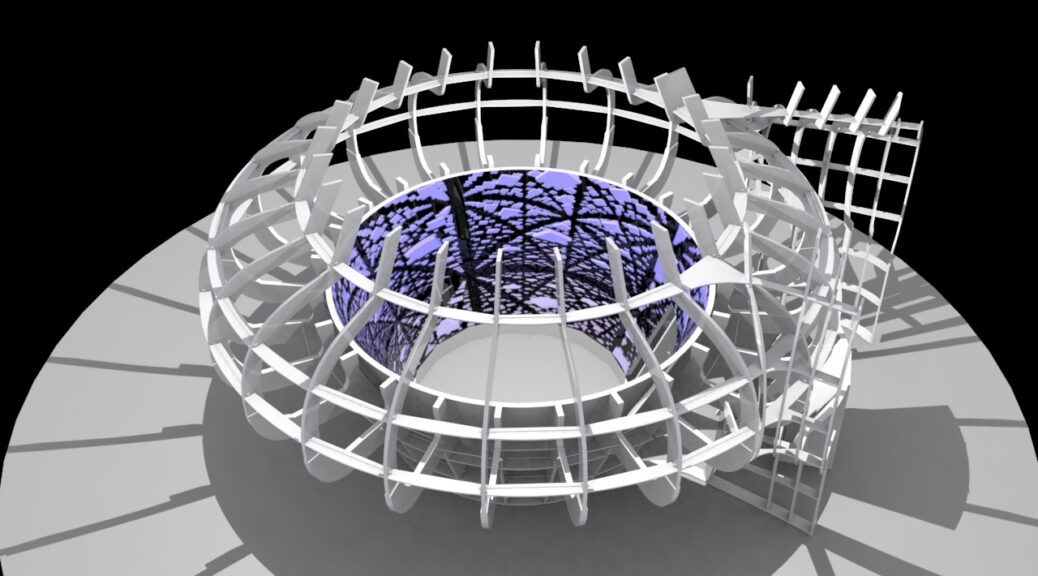
In Grasshopper, there are no really good solutions for inverse kinematics. This is a major issue for many articulated mechanisms. In this example, we will see how to create an animated folding shutter without using angles and instead using the movement that we would do in real life.
Laurent Lescop – 3D Viz – Parametric Design – Immersion – AI // Recherches et réalisations de Laurent Lescop en visualisation 3D, conception paramétrique, immersion et IA appliquées à l'architecture.