
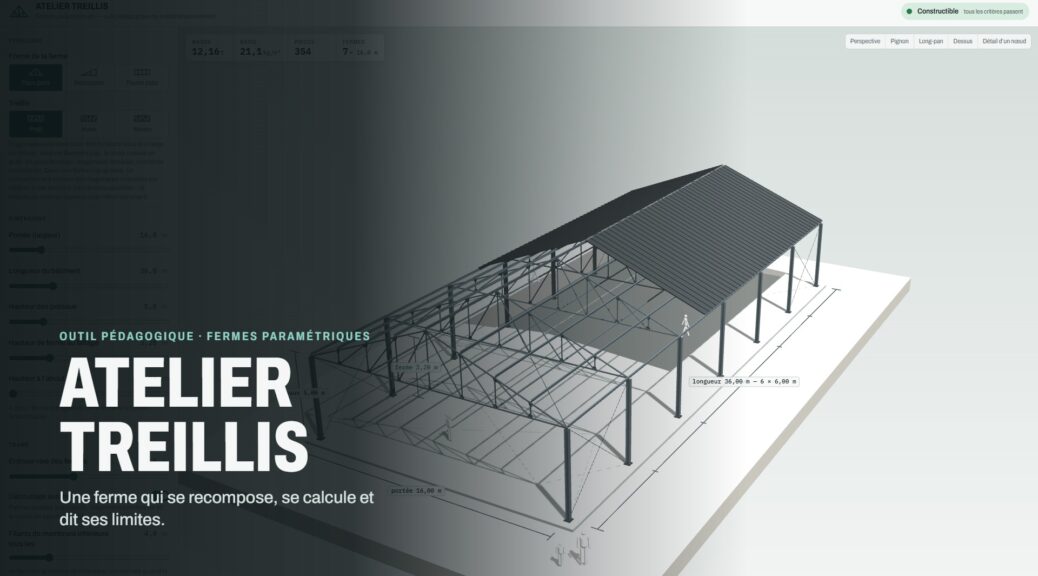
Une application web pour concevoir des fermes paramétriques
Faire varier portée, longueur et hauteur, voir la structure se réorganiser, savoir quand elle cesse d’être constructible, la montrer avec ses vrais profilés et en compter les pièces : tout cela tient dans une page web, sans serveur ni logiciel à installer.
Hangar d’exemple calculé par le prototype : ferme deux pans de 3,20 m, poteaux de 5 m, entraxe 6 m, couverture zinc, neige A2, vent région 2. Le même projet en lamellé-collé GL24h pèse environ 8,6 t (15 kg/m²).
Cadrage retenu
- Typologies
- Ferme à deux pans, monopente et poutre treillis plate, au choix, avec trois dispositions de treillis (Pratt, Howe, Warren).
- Couverture
- Zinc à joint debout ou verrière. Chacune fixe son poids, sa pente minimale, l’écartement maximal des pannes et la flèche admissible (l/200 pour le zinc, l/300 pour le verre).
- Public
- Outil pédagogique : chaque vérification est expliquée, les efforts sont dessinés, les limites sont cartographiées.
- Matériau
- Acier, avec une comparaison en bois (massif C24 ou lamellé-collé GL24h / GL28h) sur le même projet.
Faisabilité par brique
| Brique | Verdict | Ce que fait le prototype |
|---|---|---|
| Géométrie paramétrique | Réalisé | Logique des tutoriels Grasshopper : division de la portée, diagonales par décalage de liste, symétrie, nombre de fermes arrondi puis entraxe recalculé. Mise à jour instantanée aux curseurs. |
| Adaptation constructive | Réalisé | Nombre de panneaux choisi automatiquement : pannes aux nœuds, diagonales proches de 45°, le moins de barres possible. Contreventements, filants et butons placés d’office. |
| Limites de constructibilité | Réalisé | Calcul de la file courante par la méthode des déplacements, charges de neige et de vent selon les Eurocodes, choix automatique du profil le plus léger, diagnostic en 12 critères et carte des limites. |
| Vrais composants en 3D | Réalisé | Sections réelles extrudées (HEA, IPE, tubes carrés et ronds, tirants, lamellé-collé), goussets, platines, couverture zinc ou verre, socle de maquette, personnages et cotes. |
| Nomenclature et masse | Réalisé | Pièces, repères distincts, longueurs, masses, surface à peindre ou volume de bois, boulons et éclisses estimés. Export CSV, et OBJ pour Rhino. |
| Assemblages détaillés | Schématique | Goussets dessinés en enveloppe convexe et boulons comptés d’après les efforts ; pas de coupes d’onglet ni de soudures dessinées. |
Adapter la structure aux proportions
La structure ne se contente pas de s’étirer : ses règles de composition sont recalculées à chaque changement.
- Panneaux. Leur nombre est choisi pour que chaque panne tombe sur un nœud (≤ 2,5 m sous zinc, ≤ 1,8 m sous verre) et que les diagonales restent entre 30° et 60°. Hors de ces bornes, la membrure supérieure fléchit ou les diagonales travaillent mal.
- Trame. Le nombre de travées est arrondi à partir de l’entraxe visé, puis l’entraxe réel est recalculé : pas de travée incomplète.
- Stabilité. Poutre au vent dans les travées d’extrémité (et au milieu au-delà de 60 m), palées de stabilité en long-pans, filants tenant la membrure inférieure lorsque le vent soulève la toiture.
- Profils. Chaque famille de barres reçoit le profil le plus léger du catalogue qui résiste à neuf combinaisons de charges, puis les membrures sont renforcées si la flèche dépasse la limite de la couverture.
Où s’arrête le constructible
Chaque case de la carte ci-dessous est un calcul complet du hangar d’exemple, pour une portée et une hauteur de ferme données. La même carte, recalculée pour les paramètres courants, figure dans l’application.
Deux niveaux se combinent. Les règles de proportion (rapport portée / hauteur, angles, pente de couverture, gabarit routier) donnent une alerte immédiate. Le calcul tranche ensuite. Une proposition est hors limites quand aucun profil du catalogue ne résiste, quand la flèche ne peut être tenue, quand la pente ne suffit plus à la couverture, ou quand la masse dépasse le double des usages (70 kg/m²).
Un résultat qui mérite d’être montré
En orientant chaque diagonale par l’équilibre des moments (méthode de Ritter), le prototype a mis en évidence une subtilité de cours. Dans une ferme triangulaire, pour que les diagonales restent tendues comme dans une poutre Pratt, il faut les incliner dans l’autre sens.
Composants et poids
Le métré suit les pièces réelles : membrures continues découpées en tronçons de 12 m au plus (avec leurs éclisses), montants et diagonales à la pièce, pannes par travée, tirants, butons, filants, platines. Goussets et boulons sont estimés d’après les efforts de chaque nœud. Deux indicateurs parlent aux étudiants : la masse rapportée au m² couvert (repère : 15 à 35 kg/m² pour un hangar léger) et le nombre de repères distincts, qui mesure la répétitivité.
Ce que l’outil ne fait pas
- C’est un prédimensionnement : il donne des ordres de grandeur fiables pour comparer des partis, pas une note de calcul. Assemblages, fondations, neige accidentelle, séisme et incendie ne sont pas vérifiés.
- Le vent et la neige sont simplifiés : zones courantes de toiture, bâtiment fermé, altitude ≤ 1 000 m.
- Les pentes minimales de couverture sont indicatives : elles dépendent du système de verrière ou du DTU applicable.
Pistes pour la suite
- Bilan carbone indicatif acier / bois, à partir de facteurs d’émission sourcés.
- Fermes plus élaborées : Polonceau, en W (Fink), arcs treillis, portiques à traverse treillis.
- Nœuds détaillés (coupes, soudures, plats en âme) pour la vue de détail.
- Échange avec Grasshopper : export des paramètres et de la géométrie en JSON pour reprendre le modèle dans Rhino.
- Mode « exercice » : l’étudiant propose une section, l’outil vérifie et explique.
AI – Conception Bambou
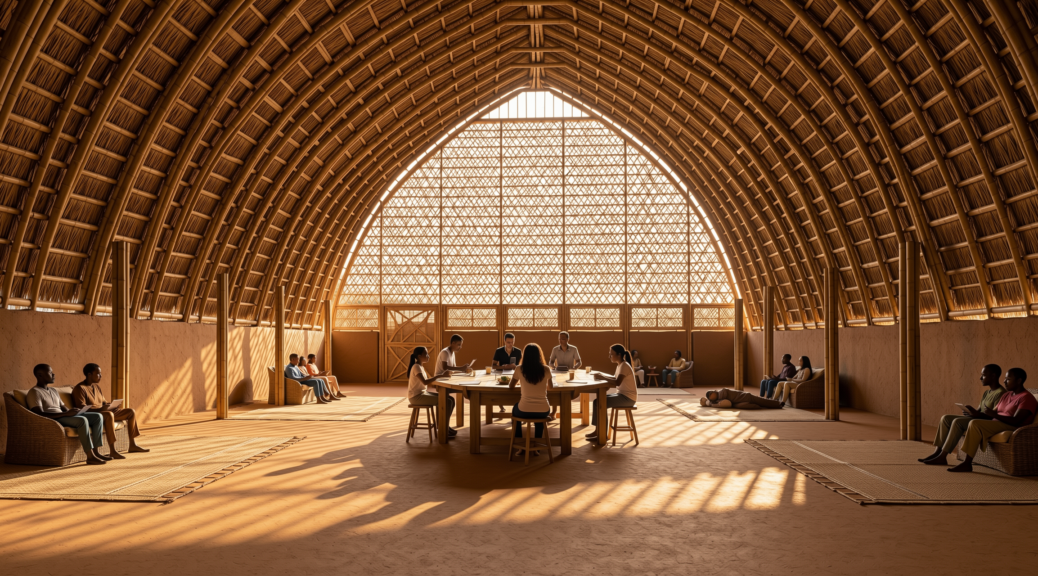
Journal de génération — Projet BAMBOO
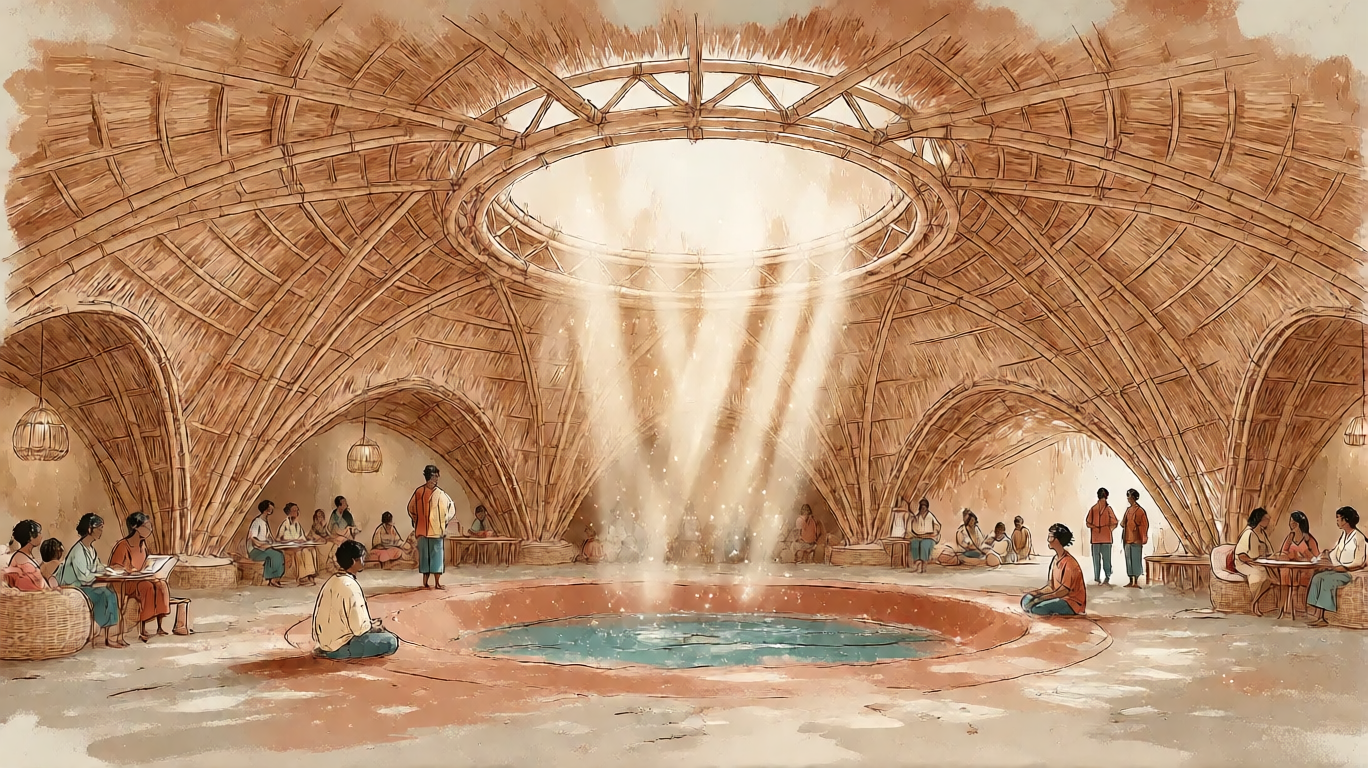
Ce document retrace chronologiquement les générations d’images ComfyUI pour le projet BAMBOO, une série de visualisations architecturales d’une halle communautaire en bambou en Afrique. Les images sont groupées par prompt ; les différences de modèle, de préréglage ou de réglage sont indiquées au sein de chaque groupe.
Ai – Landscaping
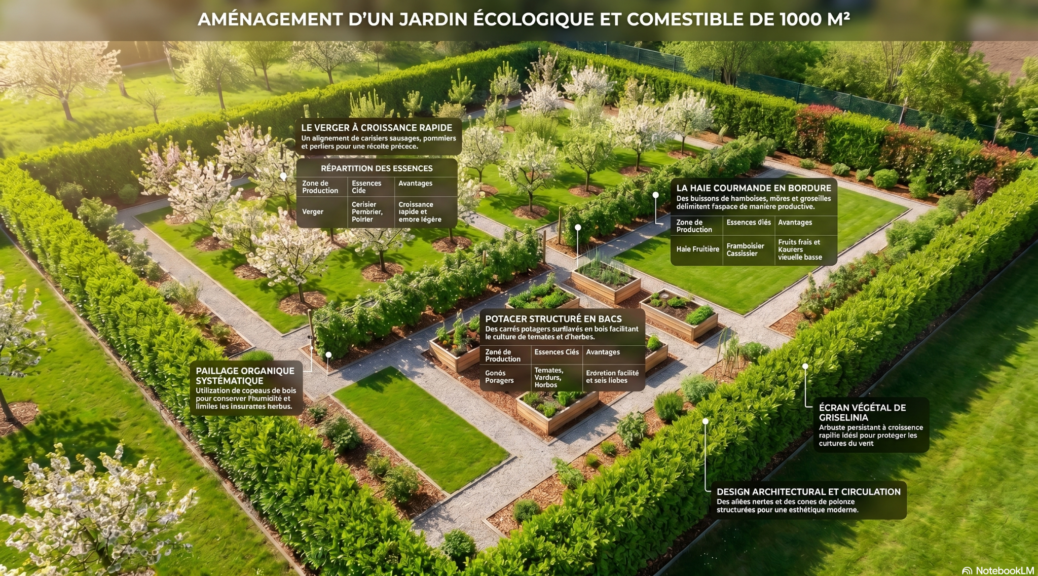
This tutorial demonstrates how to use AI image generation to visualize landscape architecture projects, from initial concept to mature growth. We will begin by establishing a baseline image of a garden and then use specific prompts to simulate the appearance of the garden after 5 and 10 years of growth, showing seasonal changes and plant maturity. Finally, we will explore transforming these photorealistic visualizations into technical CAD-style architectural plans.

prompt
Continuer la lecture de Ai – Landscaping